
Community Resource Guide
Recycling in Portland | Complete Guide to Where & What
Everything you need to know about recycling in Portland Metro—from curbside basics to specialty drop-off locations.
Recycling in Portland is more than just tossing bottles in the blue bin. In fact, Portland Metro has one of the most comprehensive recycling systems in the country, with options for everything from curbside pickup to specialty drop-off locations. However, knowing what goes where can be confusing—especially since the rules have changed over the years.
This guide covers everything you need to know about recycling in Portland, including curbside rules, electronics recycling, scrap metal, yard debris, and more. As a result, you’ll be able to recycle more effectively and keep usable materials out of the landfill.
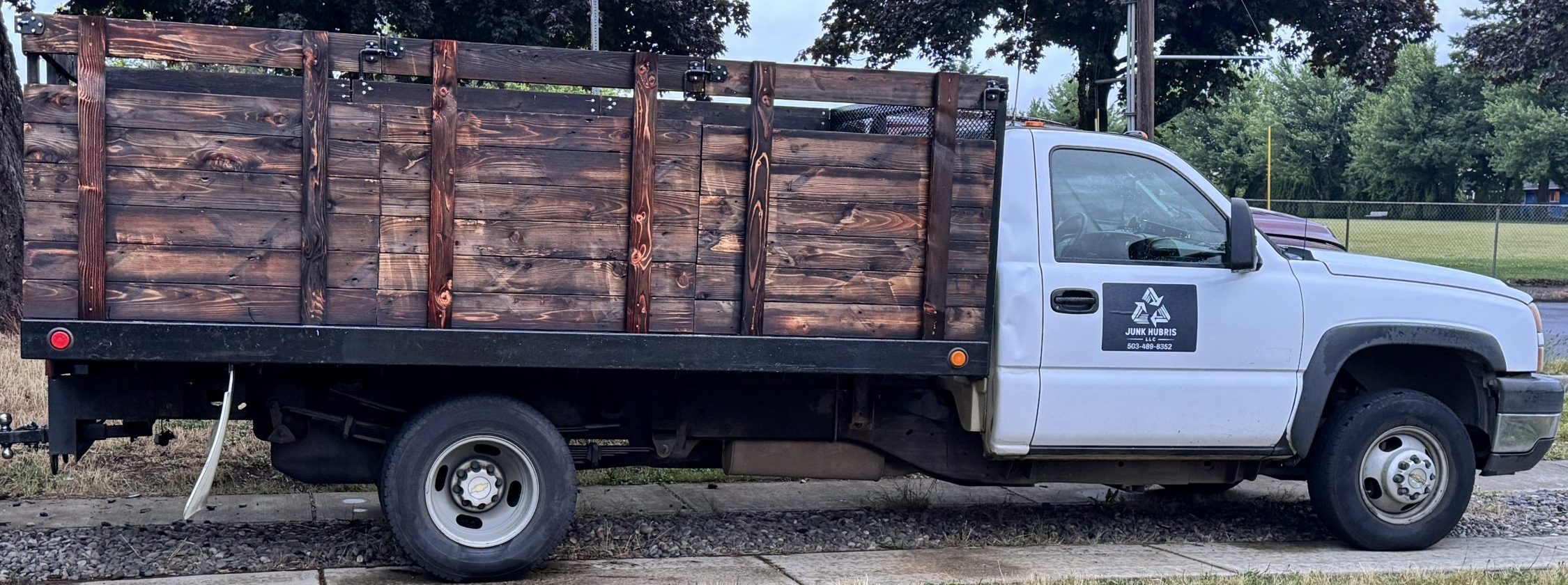
At Junk Hubris, we recycle and donate as much as possible from every job—typically around 70% of what we haul. This guide shares the same resources we use every day to keep materials out of the dump.
📋 Quick Navigation
Jump to: Curbside Recycling • Electronics Recycling • Scrap Metal • Yard Debris • Specialty Items • FAQs
🗑️ Curbside Recycling in Portland
Curbside recycling in Portland is included with your garbage service. However, what’s accepted has changed significantly in recent years due to global recycling market shifts. Below is a current guide to what goes in your blue roll cart.
✅ YES – Put in Blue Cart
Paper & Cardboard: Newspapers, magazines, junk mail, office paper, cardboard boxes (flattened), paper bags, and phone books. Make sure items are clean and dry.
Bottles & Containers: Plastic bottles and jugs (#1 and #2 only), glass bottles and jars, metal cans (aluminum, tin, steel), and empty aerosol cans.
Cartons: Milk cartons, juice cartons, and soup/broth cartons. Rinse them out and leave caps on.
❌ NO – Don’t Put in Blue Cart
Plastic bags & film: Grocery bags, bubble wrap, shrink wrap, and plastic film contaminate recycling. Take these to grocery store drop-offs instead.
Food-soiled items: Greasy pizza boxes, used paper plates, napkins, and paper towels belong in compost or trash.
Other no-nos: Styrofoam, plastic clamshells (#3-#7), tanglers (hoses, cords, chains), and anything smaller than a credit card.
⚠️ Common Curbside Recycling Mistakes
Wishcycling hurts more than it helps. When you put non-recyclable items in the blue cart hoping they’ll get recycled, it actually contaminates entire loads. Consequently, those loads may end up in the landfill anyway. When in doubt, throw it out—or check your hauler’s website for specific guidance. Remember that clean, dry, and loose items recycle best.
💻 Electronics Recycling in Portland
Electronics recycling is a key part of recycling in Portland. Thanks to Oregon’s E-Cycles program, you can recycle computers, TVs, and monitors for free. Moreover, putting electronics in the trash is actually illegal in Oregon because of the toxic materials they contain.
Oregon E-Cycles Program (FREE)
Oregon E-Cycles provides free recycling for covered electronics at drop-off sites throughout Portland Metro. This program is funded by manufacturers, so there’s no cost to you.
Covered items (FREE): Computers, laptops, monitors, TVs (all types including CRTs), keyboards, mice, and printers.
Drop-off locations: Goodwill, Free Geek, Best Buy, Metro transfer stations, and other certified collectors.
Free Geek (Best for Electronics)
Free Geek is Portland’s premier electronics recycling nonprofit. They accept a wider range of electronics than most locations and refurbish working equipment for people in need.
What they accept: Computers, laptops, phones, tablets, cables, networking equipment, and more. They take both working and non-working items.
Location: 1731 SE 10th Ave, Portland
Best Buy
Accepts electronics for recycling, but fees may apply for many items. TVs and monitors may be accepted through E-Cycles at some locations—call ahead to confirm.
Goodwill
Accepts working electronics for resale and participates in Oregon E-Cycles for computers, TVs, and monitors. Multiple convenient locations.
Metro Transfer Stations
Both Metro South and Metro Central accept electronics through Oregon E-Cycles. Convenient if you’re already dropping off other items.
🔒 Data Security Before Recycling Electronics
Before recycling computers, phones, or tablets, make sure to wipe your personal data. First, back up anything you want to keep. Then, perform a factory reset on phones and tablets. For computers, use a data wiping program or remove the hard drive entirely. Free Geek offers data destruction services if you’re unsure how to do it yourself.
🔩 Scrap Metal Recycling in Portland
Scrap metal is one of the most valuable forms of recycling in Portland. Unlike most recyclables, scrap yards actually pay you for metal—especially copper, aluminum, and brass. As a result, it’s worth separating metals before a cleanout.
💰 Metals That Pay
Copper: The most valuable common scrap metal. Found in wiring, pipes, and some fixtures. Clean copper pays significantly more than mixed or insulated wire.
Aluminum: Lightweight and valuable. Found in cans, window frames, siding, and some furniture. Cans are easy money if you collect enough.
Brass: Found in plumbing fixtures, door hardware, and decorative items. Easy to identify by its yellowish color.
Steel/Iron: Common but lower value. Appliances, furniture frames, and tools. Still worth recycling rather than trashing.
📍 Scrap Metal Yards in Portland
Schnitzer Steel: One of the largest operations in Portland. Accepts all types of scrap metal including cars. Located in NW Portland.
Calbag Metals: Full-service scrap yard with multiple Portland area locations. Competitive prices and quick service.
Metro Metals NW: Locally owned, accepts all types of metal. Known for fair pricing and good customer service.
RS Davis Recycling: Located in Clackamas, accepts scrap metal along with electronics and other materials.
💡 Tips for Getting the Best Scrap Metal Prices
Separate your metals before you go—mixed loads pay less than sorted materials. Additionally, remove non-metal attachments when possible (plastic handles, rubber, etc.). Clean copper pays significantly more than insulated wire. Finally, call ahead to check current prices since they fluctuate with market conditions. Bringing a larger load typically means better per-pound rates.
🌿 Yard Debris Recycling in Portland
Yard debris is easily recyclable and shouldn’t go to the landfill. In Portland, you have several options for recycling yard waste, from curbside pickup to self-haul facilities.
🏠 Curbside Yard Debris
Most Portland garbage services include yard debris pickup. Your green roll cart accepts grass clippings, leaves, weeds, small branches, and plant trimmings.
Accepted: Grass, leaves, weeds, flowers, small branches (under 4″ diameter), and vegetable garden waste.
Not accepted: Rocks, dirt, sod, pet waste, treated wood, or large branches. These require self-haul disposal.
🚛 Self-Haul Yard Debris
For larger loads or items not accepted curbside, self-haul facilities offer affordable yard debris disposal. Rates are typically much lower than regular garbage.
Metro Transfer Stations: Accept yard debris at reduced rates. Great for major cleanups or tree trimming projects.
Specialty facilities: McFarlane’s Bark (Milwaukie), Allwood Recycling, and Pride Recycling offer competitive rates for yard debris.
🌱 Consider Composting at Home
If you have space, backyard composting is the most eco-friendly option for yard debris and food scraps. Metro offers discounted compost bins and free composting classes for Portland residents. Not only does composting reduce waste, but it also creates free fertilizer for your garden. Visit Metro’s website for current offers and class schedules.
♻️ Specialty Recycling in Portland
Some items require special handling for proper recycling in Portland. Here’s where to take materials that don’t fit in standard bins.
🛍️ Plastic Bags & Film
Plastic bags can’t go in curbside recycling, but many grocery stores accept them. Look for collection bins at Fred Meyer, Safeway, Target, and Walmart.
Accepted: Grocery bags, bread bags, dry cleaning bags, and bubble wrap (deflated).
📦 Large Cardboard Loads
Small amounts go in curbside recycling, but large quantities from moves or deliveries can go to recycling depots.
Drop-off: Far West Recycling, Metro transfer stations. Flatten boxes to maximize space.
📦 Styrofoam/EPS
Block styrofoam (packaging foam) can be recycled at some locations. Packing peanuts are harder—try reuse first.
Drop-off: Agilyx (Tigard) accepts clean EPS. UPS stores often accept packing peanuts for reuse.
🛞 Tires
Tires can’t go in regular trash but are recyclable at various locations for a fee.
Drop-off: Metro transfer stations, Les Schwab (when buying new), Discount Tire, and dedicated tire recyclers.
🛏️ Mattresses
Oregon’s Bye Bye Mattress program offers free mattress recycling at participating locations.
FREE drop-off: Metro South, Metro Central, and ECR. Find locations →
👕 Textiles & Clothing
Even worn or damaged clothing can be recycled rather than trashed. Charities accept wearable items; others go to textile recycling.
Drop-off: Goodwill (accepts worn textiles), St. Vincent de Paul, clothing donation bins.
Frequently Asked Questions About Recycling in Portland
Here are answers to common questions about recycling in Portland.
Can I recycle pizza boxes in Portland?
It depends on the condition. Clean portions of pizza boxes can go in recycling, but greasy or food-soiled portions should go in your yard debris/compost cart instead. Many people tear off the clean lid for recycling and compost the greasy bottom.
Where can I recycle electronics for free in Portland?
Oregon E-Cycles provides free recycling for computers, monitors, TVs, and peripherals at locations throughout Portland. Free Geek, Goodwill, Best Buy, and Metro transfer stations all participate. Other electronics like phones and tablets are also accepted at these locations, though they’re not covered by the E-Cycles program specifically.
Why can’t I recycle plastic bags curbside?
Plastic bags and film wrap around sorting equipment at recycling facilities, causing costly shutdowns for repairs. That’s why they’re banned from curbside recycling. However, you can recycle them at grocery store drop-offs where they’re processed separately. Look for bins at Fred Meyer, Safeway, and Target entrances.
Do I need to rinse containers before recycling?
Yes, but they don’t need to be spotless. A quick rinse to remove food residue is sufficient—no need to run them through the dishwasher. Food-contaminated containers can spoil entire batches of recycling, so take a few seconds to rinse. Let them dry before putting them in the bin to prevent mold.
What happens if I put the wrong things in recycling?
Contamination is a major problem for recycling facilities. When non-recyclable items end up in the blue cart, they can contaminate entire loads—meaning everything goes to the landfill. Worse, items like plastic bags can damage sorting equipment. When in doubt, it’s actually better to throw something in the trash than to “wishcycle” and contaminate good materials.
We Recycle So You Don’t Have To
Not sure what can be recycled? Let us handle it.
Junk Hubris sorts every load we haul, recycling and donating approximately 70% of materials. When you hire us, you get a clean space and the peace of mind that your items are being handled responsibly—not just dumped in a landfill.
Free quotes • Same-day service available